
Intrusion, fire, carbon monoxide, water leaks, and dangerous temperatures can all be detected with alarm systems.

What are you protecting?
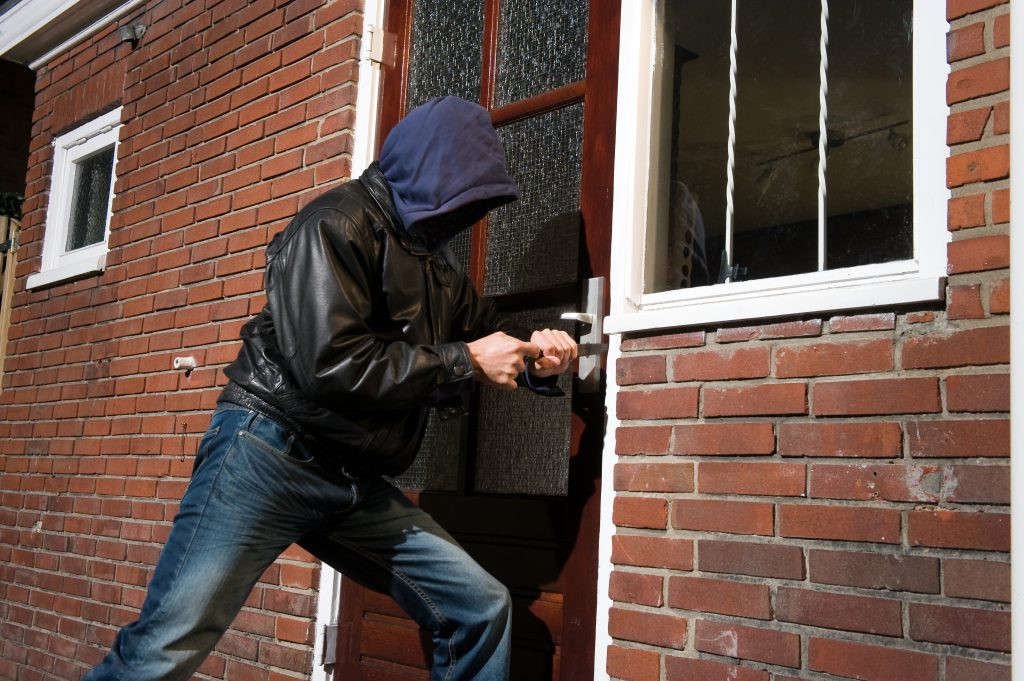
Property protection is a priority to some customers. These alarms are configured to provide notification of burglary, trespassing, vandalism, and other unintended events such as pipes breaking or freezing temperatures. Property protection alarms are often seen in warehouses, fenced parking lots, vacation homes, and small businesses that are not concerned with disgruntled employees or discontented customers.
To other customers, life & personal safety take priority over property protection. When used in residential settings, these alarms typically provide more expansive perimeter protection than “property protection only” alarms. This results in intruders being discovered while breaking into a structure rather than once already present inside the structure. In both business and residential environments, holdup buttons may be used to signal duress or panic.
Fire Alarms are often utilized for life safety as well as property protection.
Common Questions and Answers
How do you bill for monitoring?
If you are a current customer, you are billed annually. If you just became a monitoring customer, we will bill you for the communicator, the installation, and the first three months of monitoring as stated in our contract. Our contracts are initially three months long and automatically renew annually unless you request to cancel service or cease to provide payment.
We prefer to bill by email, and accept payment by cash or check.
We must charge sales tax on goods sold and labor. Security monitoring services are not subject to North Carolina sales or use taxes if the charges are separately stated on the invoice or billed on a separate invoice.
Should I choose a professionally monitored alarm or a self-monitored alarm?
Many choose to self-monitor their alarms since they are usually close their phone or email, and are usually in areas where they have cell signal or wireless internet. The problem occurs when those who self-monitor go to areas with no signal. If an alarm happens, no one is notified until connectivity is regained.
The advantage of a professionally monitored alarm is that if you are unreachable, the monitoring center will continue down the call list until the contact another person, or your local 911 center. With residential and commercial intrusion alarms, the call list order is decided in advance, and the monitoring center follows that order. With commercial fire alarms, the monitoring center first notifies your local 911 center, which dispatches the fire department. Then you receive a call from the monitoring center, and if you are unavailable, the monitoring center continues down the call list until someone is reached or there are no more people to call.
How do I disarm and arm my intrusion alarm?
For most Ademco, Resideo, Honeywell, Honeywell Home and First Alert panels, you enter your 4-digit code + 1 to disarm the system. To arm in Away mode, you enter your 4-digit code + 2. To arm in Stay mode, you enter your 4-digit code + 3. If you have an alarm, you have to first enter 4-digit code + 1 to silence, then reenter the 4-digit code + 1 to reset the system.
For DSC PowerSeries panels, simply enter you 4-digit code to disarm, and enter the 4 digit code to arm the system. Some keypads have “Away” and “Stay” buttons on the keypad, with some being written in letters, and others having an image of a person inside of a house for “Stay” and a person outside of a house for “Away”. You will have to hold the “Away” and “Stay” buttons down for several seconds for them to take effect.
Can I save money by having a professionally monitored alarm?
In certain cases, yes! If you are our customer with an alarm that is being professionally monitored, you may request that we provide you with a insurance certificate. We have heard of people paying for their entire annual alarm monitoring bill with the money they saved by providing a certificate to insurance. In such cases, it makes economic sense to choose a professionally monitored alarm over a self-monitored alarm.
Our insurance certificates list the type and quantity of each sensor. Ask your insurance company for how they calculate their discount. Most provide more discount if there are monitored fire detectors, and not just intrusion detectors. Please note that if you cease to use our professional monitoring services, it is your responsibility to notify your insurance company.
I accidentally set my alarm off. What should I do?
First, stay calm. In the worst case, law enforcement, the fire department, or EMS shows up. Once you determine it is safe to silence or reset the panel, see the instructions below:
Unmonitored Alarm: You can silence and reset the panel. Maybe your neighbor will call you to wonder what is going on.
Self Monitored Alarm: Same as an unmonitored alarm, but you can silence and reset on your phone.
Professionally Monitored Intrusion/Residential Fire Alarm: You can silence and reset. The monitoring center will give you a call, or you can call them. Be ready with your address or account number (typically written on a note on the keypad) and your established password.
Commercial Fire Alarm: Evacuate the building. Follow the directions of the Fire Department.
For most Ademco, Resideo, Honeywell, Honeywell Home and First Alert fire and intrusion panels , enter your 4-digit code + 1. This will Silence the alarm. You can now scroll through the alarms with the * button. To Reset the panel, enter your 4-digit code + 1 again.
For DSC PowerSeries, enter your 4-digit code to silence the alarm. You can now scroll with the <> arrows. You can now rearm your alarm.
It’s 2 AM and this alarm keypad is beeping. The siren isn’t going off. How do I silence it?
Your alarm panel most likely has a trouble condition and is in need of repair or maintenance.
For most Ademco, Resideo, Honeywell, Honeywell Home and First Alert fire and intrusion panels , enter your 4-digit code + 1. This will typically silence the trouble condition for 24 hours, unless you have a problem that keeps coming and going.
For DSC PowerSeries, press the # button.
For many commercial fire panels, you can press “Ack” or “Tbl Ack”. In many situations you will have to have a key or a user code to do so successfully. Fire panels can have a trouble silenced for a maximum of 24 hours, and then they will start beeping again. Call us for service. Don’t keep silencing the panel every 24 hours pretending that everything is okay! However, if you just have a temporary power outage, there is probably no need to call us as most panels clear on their own. If you have a longer power outage, you may also get a “low battery” trouble until recharged.
Does it cost me more if I have more sensors?
This is dependent on the configuration.
The bad news is that a larger alarm system will have a greater up front cost for the equipment and installation.
The good news is that our monitoring price typically remains the same regardless of the number of alarm zones that you have (up to 64 zones), so if your house has 1 door sensor, 2 motion detectors, and a smoke detector, the monitoring service cost will be $440 per year. The residential, professional monitoring service will still be $440 per year if you have 8 doors, 9 motion detectors, 24 windows, 8 smoke detectors, 4 heat detectors and 6 panic buttons.
Is there a discount for multiple accounts?
Yes. We usually provide discounts to persons and companies with 2 or more accounts.
The Fire Marshal inspected our facility and told us we need a fire alarm inspection. What do I do?
North Carolina has adopted NFPA 72, which requires that commercial fire alarms be inspected and tested annually. Timco Security provides this service. Some systems are small and cost little more than a service call, though larger systems may take a full day to test and inspect. Also, some Authorities Having Jurisdiction require that we submit our findings to an online portal. These websites charge fees and can take a good bit of time to satisfy, increasing your cost. Other AHJs simply require the owner to keep a copy of the inspection & testing report.
Timco Security does not provide other fire related inspections such as sprinkler inspections, kitchen hood inspections, fire extinguisher inspections, fire door inspections, or exit/emergency light inspections.
Why is commercial fire alarm monitoring so expensive and has fewer options?
Commercial fire alarm systems have extensive requirements, including more frequent check in times than intrusion alarms and restrictions against remote silencing, resetting, and programming. Commercial Fire Alarm components “self test” at regular intervals to make sure that they are functioning properly. The communications equipment also self-test themselves more often than intrusion alarms, thus increasing the cost of cellular service.
Timco Security does not provide other fire related inspections such as sprinkler inspections, kitchen hood inspections, fire extinguisher inspections, fire door inspections, or exit/emergency light inspections.
I no longer want to pay for self-monitored or professionally monitored services. How do I cancel?
First, we are sad to see you go. Second, we will try to make it as easy as possible.
We cannot cancel alarm service and refund the unused portion your monitoring service fee if you do not contact us in writing. You may send us a paper letter, or email us using the same email address that we use to send you invoices. Be sure to sign your name and place the date on your paper letter.
If you don’t want to be hassled with contacting us, you can also simply stop paying your bill, but we won’t be able to provide you with any refund. If a customer fails to pay for his monitoring service by the due date, we “shall provide notification to that consumer by verified personal service or certified mail at least 10 days prior to cessation of the services. This provision shall not apply to consumer-intiated action to terminate or upon consumer relocation.” (14B NCAC 17 .0108b)
Third, if you terminate commercial fire alarm monitoring, we may be required to notify a fire code official. “For fire alarm systems required to be monitored by this code, notice shall be made to the fire code official whenever alarm monitoring services are terminated. Notice shall be made in writing, to the fire code official by the monitoring service provider being terminated.” (emphasis in original, 2018 North Carolina Fire Prevention Code,
901.9 Termination of Monitoring Service)
My alarm monitoring was terminated, but I want to get it reconnected. What do I do?
Please contact us and we will set up an appointment to reactivate your system. The process is very similar to getting a new alarm, except the equipment is already installed. You will also have to sign a new Security Equipment Installation, Monitoring and Servicing Agreement. If you are having the alarm professionally monitored, we will come out and test the alarm to verify that the alarm is working and that the signals are reaching the monitoring center. Standard service call charges apply, and you will be billed up front for the first 3 months of monitoring service. After that, you will be billed annually.
Please note that older cellular and internet communicators may have sunset dates which prohibit us from being able to reactivate them. Sometimes manufacturers will not support registration after a certain date (because of an impending sunset), so if your communicator is unregistered, we may be unable to re-register it. In those situations, we may have to replace the communicator with a newer one. Costs of upgrading equipment fall on the customer.
I have an alarm installed by ______________. Can you repair, service, and monitor it?
Possibly. If the equipment is made by Ademco, Resideo, Honeywell, Honeywell Home or First Alert), there is a reasonably high probability that we can use much of the existing equipment. The cost to takeover such system is dependent on how much time is required and whether the installer has “locked out” other installers. If you want monitoring service, we will also have to add a communicator module. It is often better to spend several hundred dollars more for a new system than to reprogram an old one, and this gets you an up-to-date system.
I want a monitored alarm but have no cell signal. What can I do?
Our intrusion communicators communicate via Verizon or AT&T, and/or Internet. The cellular service is included in the $440/year price whether cellular, internet, or both are used. Internet communication requires the customer to provide the internet. Unfortunately, some people have no options for internet except Starlink. We no longer connect to POTS (Plain Old Telephone System) lines.
Please note that our internet-connected devices will have to be hardwired to your internet.
Why does intrusion monitoring cost $440/year? Other companies are cheaper!
We answer the phone (or return calls, if you leave a voicemail or have a local number). We respond to emails. We install good products. We know our products and their limitations. We compete with good service and competence rather than cost. If you have an issue with your alarm, we will try to figure it out over the phone so you you don’t need a service call. Not every potential customer is a fit for us, and we aren’t a fit for every potential customer!